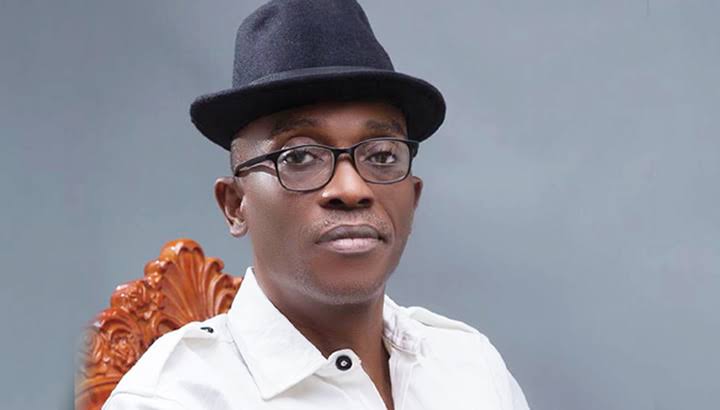
Immediate past National Chairman of the Labour Party (LP), Julius Abure, has ruled out supporting Peter Obi in the 2027 presidential election, declaring his readiness to align with President Bola Tinubu or former Vice-President Atiku Abubakar.
Abure, however, said his political decision would depend on the outcome of a pending Supreme Court case over the Labour Party leadership, his political interests and ideology, as well as the acceptability of the candidate seeking his support.
In an exclusive interview with The PUNCH, the former LP chairman disclosed that he would consult his supporters and consider available political offers if the Supreme Court failed to deliver judgment before the end of November.
He said his camp remained open to working with major presidential contenders, but insisted that Obi and the Nigeria Democratic Congress (NDC), where the former Anambra State governor is now positioned, were not among his options.
“As for me, we are waiting for the Supreme Court to decide our case, and if the judgment is not coming before the end of this November, we will rationalise the offer of whoever wants our support,” Abure said.
He added that any alliance must align with his camp’s interests and ideology and involve a candidate capable of attracting widespread support.
“However, it must tally with our interest and ideology, and he must be a sellable candidate. Once these are settled, our faces will be everywhere. I am talking about the same faces that took Peter Obi everywhere in 2023,” he stated.
Abure declared that while he was willing to consider other major political contenders, he would not support Obi in the next presidential election.
“I am very sure that I wouldn’t support Peter Obi for the 2027 general election. But I am open to an alignment with others,” he said.
The former LP chairman also disclosed that he was not currently negotiating with any presidential candidate, stressing that his decision would involve consultations with his followers and consideration of their interests.
Abure claimed that a significant number of his supporters remained loyal to the Labour Party structure under his control, despite the defection of some members to other political platforms.
He accused Obi and Abia State Governor Alex Otti of undermining the party’s leadership and dismantling its organisational structure from the ward to the national level.
According to him, the prolonged crisis within the Labour Party was worsened by disagreements over the party’s leadership, national convention and the emergence of a parallel National Working Committee in Owerri.
While Abure blamed Obi and Otti for the party’s internal troubles, allies of the former LP presidential candidate had argued that Abure violated an earlier understanding on conducting an inclusive convention, beginning at the ward and state levels before the national convention.
The dispute widened the rift between the two camps, eventually contributing to Obi’s departure from the Labour Party and his subsequent political realignment.
Questioning Obi’s leadership credentials, Abure argued that the former governor’s handling of the party crisis had raised concerns about his capacity to lead the country.
“Obi’s behaviour in the Labour Party is now what people are using to assess if he can truly lead the country. This is because if you can’t lead a micro, there is no way you can lead a macro,” he said.
Abure also criticised Obi’s political movement from the Labour Party to the African Democratic Congress before his emergence on the NDC platform, alleging that the former presidential candidate expected to reproduce the leadership struggles experienced in the LP.
He further argued that Obi would not enjoy the same political freedom and influence in the NDC that he allegedly had under his leadership in the Labour Party.
“No way! Let Obi compare the freedom and leverage he enjoyed under our leadership to what he is experiencing in the NDC; he already knows the difference. You can see that Senator Dickson is fully in charge and he’s not giving up the party’s leadership,” Abure said, referring to NDC national leader, Senator Seriake Dickson.
Assessing Obi’s chances in the 2027 election, Abure predicted that the former governor would perform below his 2023 electoral showing, claiming that he had lost much of the goodwill, human capital and political resources that boosted his previous campaign.
“Let me say clearly that Obi will not record the successes he recorded in the 2023 general election. That is because he has squandered his goodwill, human capital, resources, and mismanaged all the gains he had in 2023,” he stated.
He also argued that Obi’s exit from the LP had weakened the organisational structure and campaign machinery that helped him secure more than six million votes in the 2023 presidential election.
Reacting to Abure’s position, NDC Presidential Campaign Council spokesperson, Constance Ikokwu, said Obi remained focused on his campaign and the party’s preparations for the 2027 presidential contest.
Ikokwu dismissed the former LP chairman’s comments, wishing him well in his political pursuits.
“Mr Peter Obi is fully occupied with the campaign trail, focused on the important task of leading a national effort towards the 2027 presidential contest, an election that offers Nigerians an opportunity to rescue the country and change its direction.
“In the light of that, all we can say is good luck to Mr Julius Abure in his new ventures,” she said.
Similarly, Obi’s media aide, Idris Zekeri, said the campaign had moved on from Abure and was concentrating on mobilising Nigerians ahead of the election.
“We no longer talk about Abure. We have moved on from them. We have an election less than 70 days away, and then we are campaigning,” Zekeri said.
He urged Nigerians who believe in equity, justice, fairness, competence and compassion to support Obi, while acknowledging that political differences remained part of the democratic process.
Zekeri further suggested that Abure’s opposition to Obi was driven by personal grievances, arguing that national interest should take precedence over individual sentiments.
He maintained that Abure was not central to the campaign’s immediate priorities.