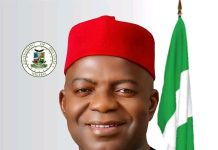

The governorship candidate of the Peoples Democratic Party (PDP) in Abia State, Dr. Kelechi Anosike, has pledged to introduce a skills-based education policy that will ensure students graduate with both academic qualifications and practical skills.
Anosike made the pledge under his proposed “No Abia Student Left Behind” initiative, which he said would place emphasis on education, skills acquisition, healthcare, transportation and entrepreneurship.
According to him, the goal is to equip young people with the knowledge and practical abilities needed to become self-reliant and economically productive.
“An education that opens doors, skills that create opportunities and a government that stands by the students — that is the agenda,” he said.
The PDP candidate argued that academic programmes should be complemented with vocational training and entrepreneurial skills to reduce graduates’ dependence on scarce white-collar jobs.
He said: “Never again will any graduate finish with only certificates. You complete your certificate and then you have a skill or you have learnt a trade.”
Anosike also promised to provide start-up assistance to graduates who acquire relevant skills while in school, enabling them to establish businesses and become employers of labour.
He noted that government could not provide white-collar employment for every graduate, but could create an enabling environment where young people can build sustainable businesses.
On healthcare, the PDP candidate promised to upgrade medical facilities in tertiary institutions, particularly to ensure that students have access to properly equipped health centres during emergencies.
He added that the proposed intervention would not be restricted to state-owned institutions, as Abia indigenes studying in other tertiary institutions within the state would also be covered.
Anosike further identified student transportation and healthcare as key areas of his proposed youth and education agenda.
He described students and young people as valuable assets to the state, stressing that government must invest in their development.
He also disclosed plans to connect entrepreneurship programmes with grants and cooperative financing schemes to help young people and small business owners access funds for productive ventures.
According to him, his administration would establish a traders’ microfinance initiative aimed at providing accessible financing to small and medium-scale businesses, subject to appropriate regulatory and operational guidelines.